
Tracy L Simmons: My DNA Story
I have always been interested in my family lineage as far back as I can remember and always questioned my elders about their lives. History and Science were always my favorite subjects in school and as an adult I began my quest into my family genealogy. Although I have been very successful in my Cornute line research, it hasn’t quenched my thirst to know and understand my origins.
Nothing replaces physical research and documentation of genealogical facts, however, with the advances in DNA technologies and the boom of its use in genealogy, driven by the numerous television shows highlighting its use, I decided to jump on the bandwagon and give it a try.
For genealogical purposes, there are three main types of DNA tests that are available: Y-Chromosome DNA (yDNA) tests for the direct paternal line, mitochondrial DNA (mtDNA) tests for the direct maternal line, and autosomal DNA (atDNA) tests for finding matches on all your ancestral lines.
Last year I took the AncestryDNA autosomal DNA (atDNA) test and some of my results were expected and others were a bit surprising. My expectations were that I would be mostly of West African descent with a small European contribution. My ethnicity estimate results are as follows:
| Ethnicity Region | Percentage (%) |
|---|---|
| Benin/Togo | 45% |
| Cameroon, Congo, Southern Bantu Peoples | 28% |
| Mali | 8% |
| Ivory Coast/Ghana | 7% |
| Ireland and Scotland | 6% |
| Nigeria | 2% |
| Norway | 1% |
| England, Wales & Northwestern Europe | 1% |
| Spain | 1% |
| African South-Central Hunter-Gatherers | 1% |
Breaking it down further, my African ancestry totals 91% and my European ancestry is 9%. Given these results and my expectations outlined above the most surprising things to me were/are:
The total European percentage (9%) and specifically Ireland, Scotland (6%) and Spain (1%) and;
- African South-Central Hunter-Gatherers (1%) because this group is made up of ancient hunter-gatherer and pastoral groups who are considered the wellspring of human populations around the world. The nomadic Khoe-San peoples of this region having among the highest levels of genetic diversity in the world has led researchers to believe that they are one of the world’s most ancient human populations.
These are my results today, but could be modified in the future when AncestryDNA’s database is expanded due to new methods and technology. Needless to say, I am still not satisfied and want more, I want to know where and which group my oldest ancestor came from. So last month I took the African Ancestry mitochondrial DNA (mtDNA) test and I am waiting for those results which are expected in late November. The results of my motherline ancestry will be most interesting as my research has identified my maternal 4th great grandmother, Candice Wilson, as a slave in North Carolina. Meanwhile, based on the results from my AncestryDNA tests, I’m taking in as much relevant African History as possible.
Motherline Update—November 9, 2018
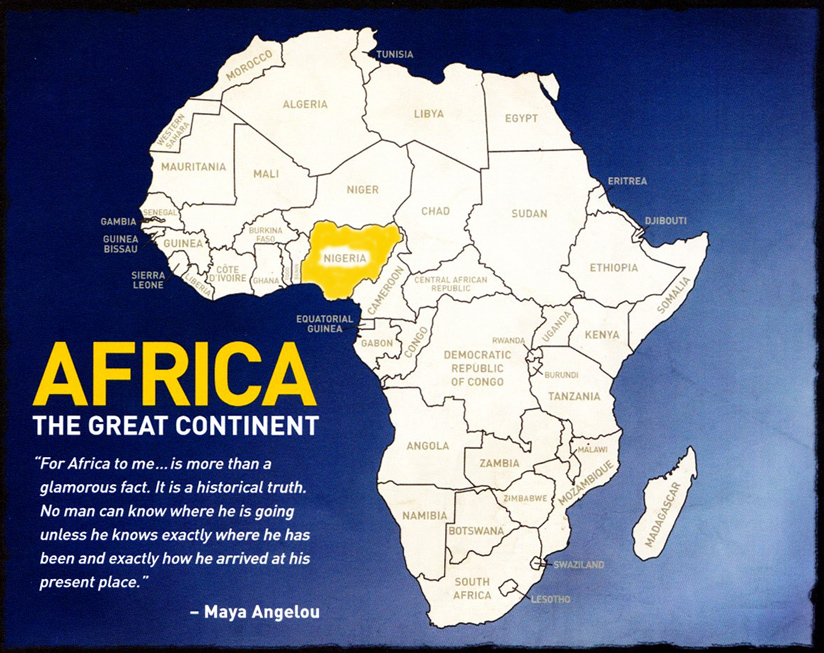
As indicated in the previous segment I took the African Ancestry mitochondrial DNA (mtDNA) test and I received those Maternal Lineage results in November. The results show that my motherline is of the HAUSA AND FULANI PEOPLE LIVING IN NIGERIA—How Exciting.

Who are the Hausa and Fulani
Hausa–Fulani is a term unique only to Nigeria which collectively refers to the Hausa and Fulani as a people. The two are grouped together because since the Fulani War their histories have become even more intertwined within Nigeria. Although through migration into Hausaland, the Fulani have been part and parcel of Hausa society both as settled and nomadic Fulani since the 1400s.
Although found throughout the grassland belt of West Africa, the bulk of the Hausa/Fulani population is concentrated in Northern Nigeria especially in and around the centers of Sokoto, Kano and Katsina which were important market centers on the southern section of the trans-Saharan caravan trade routes in the past.
The coming of the Fulani into Hausa land brought the full force of Islam which became a great factor in social life and culture. In education, dress, taste and outlook, the Hausa and their Fulani conquerors became part of the Islamic culture world. This influence remains till today.